9/13/2026
Whey Protein: Concentrate, Isolate or Hydrolyzed?
Whey protein is one of the most popular supplements among people who exercise. It can help increase protein intake and support muscle recovery and maintenance.
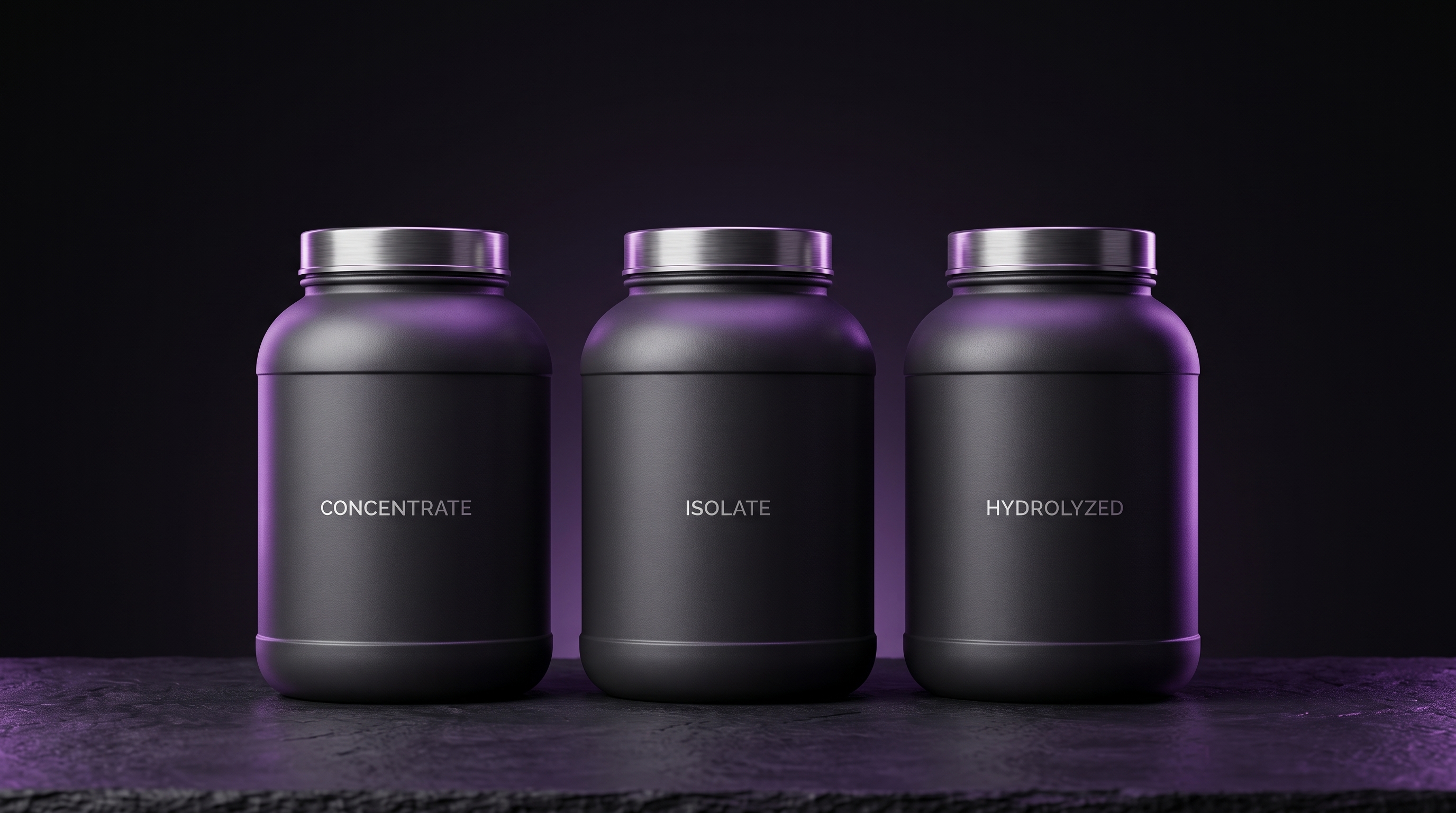
But not all whey protein is the same. The three most common types are whey concentrate, whey isolate and hydrolyzed whey.
What is the difference between them? And is whey isolate actually better?
What is whey protein?
Whey protein is a high-quality protein obtained from milk during cheese production. It contains all of the essential amino acids.
Whey is mainly a convenient way to consume protein. It does not replace a balanced diet, but it can be useful when it is difficult to meet your protein needs through food alone.
Whey concentrate
Whey concentrate undergoes filtration that removes some of the non-protein components while retaining a significant amount of protein. It can also contain small amounts of carbohydrates, fat and lactose.
The protein content varies between products, but it is commonly around 70–80%.
Who may benefit from whey concentrate?
It can be a good option if you:
- Want a more affordable protein supplement;
- Tolerate small amounts of lactose;
- Want to increase your daily protein intake;
- Are looking for a practical everyday whey protein.
Whey isolate
Whey isolate undergoes additional filtration to remove most of the carbohydrates, fat and lactose.
As a result, it generally provides a higher percentage of protein per serving.
Is whey isolate better?
Not necessarily.
For many people, whey concentrate provides plenty of protein and works very well for their goals.
Whey isolate may be useful if you prefer a product with a higher protein concentration or need to reduce lactose intake.
Hydrolyzed whey
Hydrolyzed whey goes through a process called hydrolysis, which breaks some of the proteins into smaller peptides.
This can make the protein easier to digest for some people.
However, hydrolyzed whey does not automatically produce better muscle-building results for everyone.
It is also usually more expensive and may have a more bitter taste depending on the formulation.
Concentrate vs. isolate vs. hydrolyzed whey
| Type | Protein | Lactose | Price | Main characteristic |
|---|---|---|---|---|
| Concentrate | High | Higher | $ | Good value |
| Isolate | Very high | Lower | $$ | Higher protein concentration |
| Hydrolyzed | High | Usually low | $$$ | Partially hydrolyzed protein |
Exact values vary between products, so always check the nutrition label.
Which whey should you choose?
There is no single best whey for everyone.
For value: concentrate can be an excellent choice.
For higher protein concentration and less lactose: isolate may be a better fit.
If you specifically want hydrolyzed protein: hydrolyzed whey is an option, although it is usually more expensive.
More important than finding the "perfect" whey is making sure your overall daily protein intake matches your needs.
Can whey protein help build muscle?
Whey can contribute to muscle growth and maintenance because it provides high-quality protein and essential amino acids.
However, the supplement itself does not build muscle.
Results depend on several factors, including:
- Resistance training;
- Adequate protein intake;
- Sufficient energy and nutrients;
- Sleep and recovery;
- Consistency over time.
Do you need to take whey after a workout?
Not necessarily.
Having protein after training can be convenient, but your total protein intake throughout the day is more important.
Whey can be used at breakfast, as a snack or at another time that fits your eating routine.
How much whey should you take?
The appropriate amount depends on your individual protein needs and how much protein you already get from food.
A typical serving provides around 20–30 g of protein, but this varies between products.
Instead of choosing a dose based only on scoop size, check the nutrition label to see how much actual protein each serving provides.
Conclusion
Whey concentrate, isolate and hydrolyzed whey are different forms of milk-derived whey protein.
Concentrate generally offers a good balance between price and protein. Isolate has a higher protein concentration and less lactose. Hydrolyzed whey goes through an additional hydrolysis process.
None is automatically "the best." The right choice depends on your needs, budget, lactose tolerance and preferences.
Ultimately, the best whey is the one that helps you meet your protein needs conveniently and consistently.